Nov 11, 2026 · @Ahmed Mkhalfi
Sunscreen labels pack a lot of science into a few short lines. SPF 40, broad spectrum, active ingredients, water resistant: each term describes a specific, measurable property of the formula.
This guide breaks those terms down in plain language. It covers what active ingredients do, what the SPF number measures, and what “broad spectrum” means on a US label. It also looks at why formulators add ingredients like Vitamin C and nicotinamide, and why a sheer tint has become a popular feature in daily sunscreens.
The goal is simple: to make the label readable, so choosing and using a daily sunscreen feels straightforward. We’ll use TECHiHealth’s Vitamin C Tinted SPF 40 Hydrating Face Sunscreen as a worked example, but the principles apply to any sunscreen you pick up.
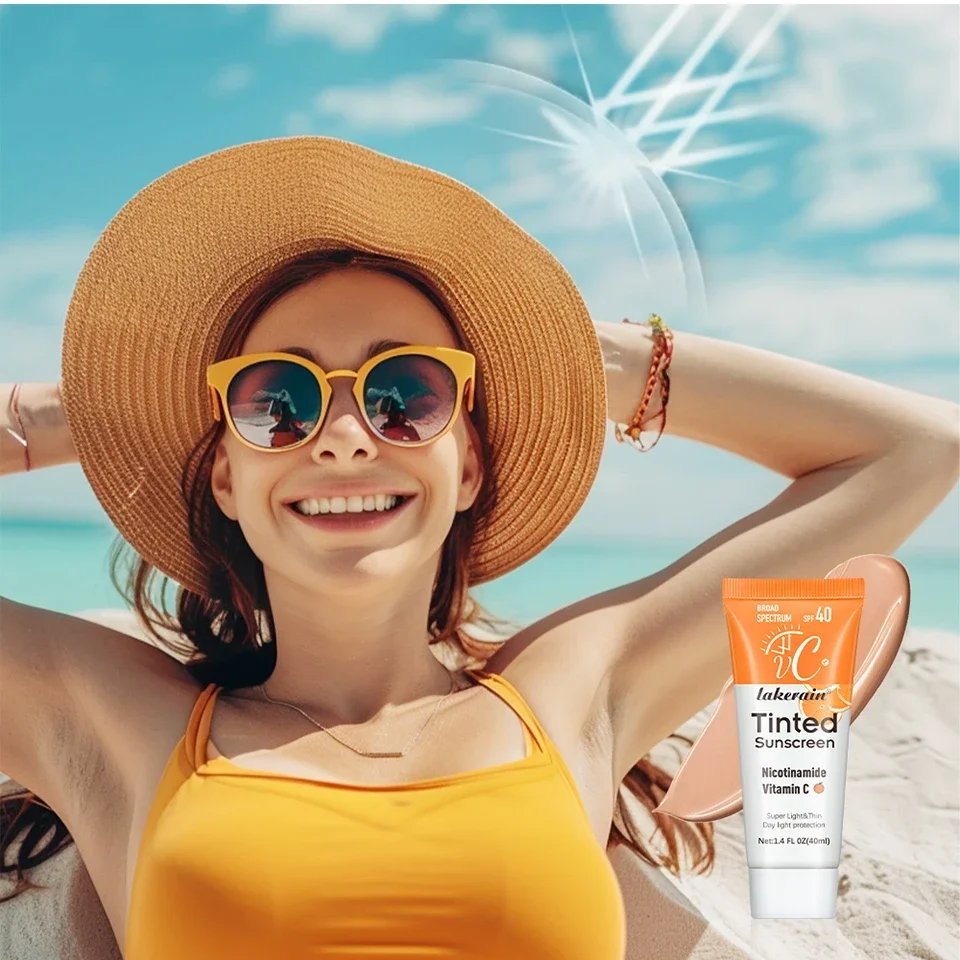
Daily SPF that keeps up with a day outdoors: TECHiHealth’s Vitamin C Tinted SPF 40.
In the US, sunscreen is regulated as an over-the-counter drug. The ingredients that filter UV light are its active ingredients, and they’re listed first on the Drug Facts panel, each with its percentage.
US sunscreens draw on two families of FDA-listed UV filters. Mineral (inorganic) filters are zinc oxide and titanium dioxide. Organic filters are carbon-based molecules such as avobenzone or homosalate. Both families can make an effective broad-spectrum product, and some formulas combine them. To see which a sunscreen uses, check the active ingredients on its Drug Facts panel.
Only active ingredients count toward the SPF. Everything else on the label is an inactive ingredient: moisturizers, antioxidants like Vitamin C, supporting ingredients like nicotinamide, and tint pigments. Inactive ingredients shape how a formula feels and wears, but they don’t change the SPF number.
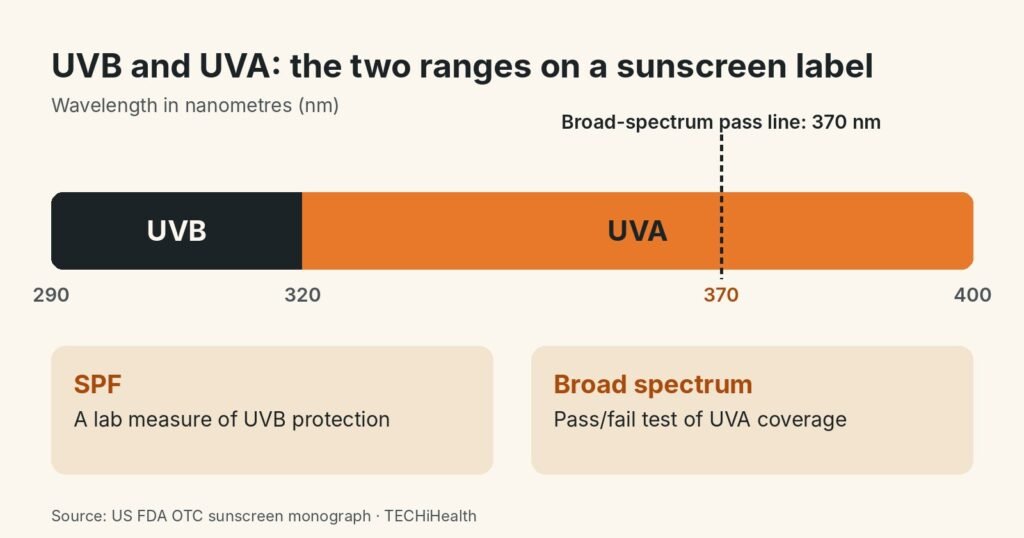
| UVB | UVA | |
| Wavelength | 290–320 nm | 320–400 nm |
| Commonly associated with | Sunburn | Deeper skin penetration and sun-related skin aging |
| What measures it on a label | The SPF number | The “broad spectrum” designation |
| Through window glass? | Mostly blocked by window glass | Passes through window glass |
The distinction matters because SPF and “broad spectrum” answer two different questions, which the next sections unpack.
SPF (sun protection factor) is a lab measure of protection against UVB. In the standard test, testers apply a sunscreen at 2 mg per square centimetre of skin. Testers then compare how much UV it takes to produce redness with and without the sunscreen.
Higher SPF numbers mean more UVB protection in the lab, but the gains get smaller as the number climbs. Most people also apply less than the test amount, so how much you use matters as much as the number on the tube. The American Academy of Dermatology reports that many people apply only 20–50% of the amount needed to reach the labelled SPF.
SPF 40 sits comfortably within the range most dermatology organizations suggest for daily use: SPF 30 or higher, broad spectrum.
“Broad spectrum” means the product passed the FDA’s broad-spectrum test, which checks UVA protection relative to UVB protection. Only products that pass may print “Broad Spectrum SPF [value]” on the front label.
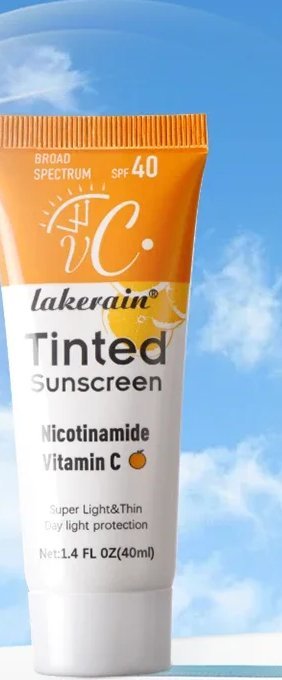
“Broad Spectrum SPF 40” on the front label means the formula passed the FDA’s broad-spectrum test.
The test measures a value called the critical wavelength. To pass, a sunscreen’s protection must extend to a critical wavelength of at least 370 nm, which reaches well into the UVA range. Unlike SPF, the result is pass or fail, so there’s no “broad spectrum” number.
Vitamin C is in the formula as an antioxidant ingredient, not as a UV filter. The two do different jobs and are designed to work side by side.
UV exposure and everyday environmental stressors generate free radicals, unstable molecules that can react with the proteins and lipids around them. Antioxidants donate electrons to stabilize those molecules. Dermatology reviews describe Vitamin C as the most abundant antioxidant naturally present in human skin.
Vitamin C does not absorb UV light, so it adds nothing to the SPF number. Its role is complementary: the UV filters handle UV light, while Vitamin C supports the formula’s antioxidant profile. That’s why it appears under inactive ingredients on the Drug Facts label, while the UV filters appear as active ingredients.
In the TECHiHealth formula, Vitamin C sits alongside nicotinamide in a light, thin, hydrating base, so a single step brings together UV filters, supporting ingredients, and moisture.
Nicotinamide, also called niacinamide, is a form of vitamin B3 that’s widely used in skincare formulas. Like Vitamin C, it’s an inactive ingredient in a sunscreen. It doesn’t add to the SPF; the UV protection comes from the active ingredients listed on the Drug Facts label.
The tint is there for wearability. Some sunscreen formulas can leave a visible white or pale layer on the skin, especially on deeper skin tones.
A sheer tint offsets that pale layer so the formula blends with a more natural finish. For many people, that’s the difference between a sunscreen they’ll reach for every morning and one that stays in the drawer.
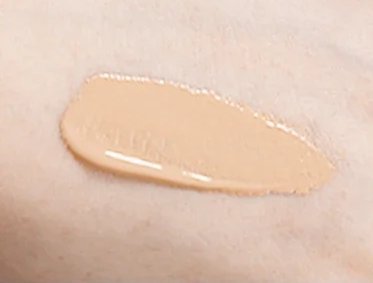
A sheer tint helps the formula blend in with a natural, lightweight finish.
The SPF on the label assumes a generous, even layer, reapplied on schedule. Three habits get you there.
The American Academy of Dermatology suggests at least 1 teaspoon for the face, about enough to cover the length of your index and middle fingers. It looks like a lot at first. Dot the product across the face, then smooth and press it in for an even layer.
The American Academy of Dermatology’s guide for the face: at least 1 teaspoon, about two finger-lengths.
US label directions call for reapplying at least every 2 hours, and also after swimming, sweating, or towel drying. A tinted formula makes midday touch-ups easier, since it can go over a light base without leaving a white layer.
Is a tinted sunscreen suitable for daily wear? Yes. A light, thin, hydrating formula is designed to be the last step of a daily morning routine, under makeup or on its own.
Can tinted sunscreen go under makeup? Yes. Apply it as the last skincare step, give it a minute to set, then apply makeup on top. Many people find a tinted formula can stand in for a light base.
Where do I find which UV filters a sunscreen uses? On the Drug Facts panel, under “Active ingredients.” Each filter is listed with its percentage, whether it’s a mineral filter like zinc oxide or an organic filter like avobenzone.
Do Vitamin C or nicotinamide raise the SPF? No. Both are inactive ingredients and don’t absorb UV light. The SPF comes from the active ingredients listed on the Drug Facts panel.
Is this sunscreen water resistant? Only if the label says so, and that label must state either 40 or 80 minutes. Our Vitamin C Tinted SPF 40 doesn’t carry a water-resistance rating, so reapply after swimming, sweating, or towel drying, and at least every 2 hours.
A sunscreen label is a short list of regulated, testable claims. SPF measures UVB protection, “broad spectrum” confirms UVA coverage, and the active ingredients tell you which UV filters do the work. Everything else, from Vitamin C to tint, shapes how the formula feels and wears.
TECHiHealth’s Vitamin C Tinted SPF 40 Hydrating Face Sunscreen brings those pieces together: broad-spectrum SPF 40, Vitamin C and nicotinamide in a light, thin base, and a sheer tint with a natural, lightweight finish.
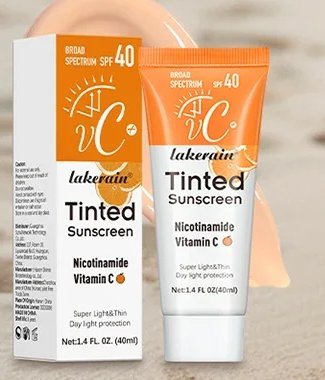
Vitamin C Tinted SPF 40 Hydrating Face Sunscreen, 1.4 fl oz (40 ml), $11.95 at TECHiHealth.
Explore the formula at TECHiHealth · $11.95 →
This article is for general educational purposes and is not medical advice. Always use sunscreen as directed on the label.
Upload each image with the file name below, paste the alt text into the image’s alt field, and use the caption under the image. The image description goes in your site’s media library (title or description field). Compress each file to under 200 KB, or convert to WebP, before uploading.
| Placement | File name | Alt text | Caption | Image description |
| Hero, after the introduction | techihealth-tinted-sunscreen-spf40-beach.png | Woman in a straw sun hat and sunglasses relaxing on a beach, with a tube of Vitamin C Tinted SPF 40 sunscreen beside her | Daily SPF that keeps up with a day outdoors: TECHiHealth’s Vitamin C Tinted SPF 40. | Lifestyle photo of Vitamin C Tinted SPF 40 tinted sunscreen at the beach, from TECHiHealth. |
| After the UVA vs. UVB table | uva-uvb-spectrum-broad-spectrum-370nm.png | Diagram of the UV spectrum: UVB from 290 to 320 nm, UVA from 320 to 400 nm, with the broad-spectrum pass line at 370 nm | SPF measures UVB protection. The broad-spectrum test checks that protection reaches at least 370 nm, well into the UVA range. | Infographic explaining UVA and UVB wavelengths, SPF and the FDA broad-spectrum test. |
| What “broad spectrum” means | vitamin-c-tinted-sunscreen-spf40-label.png | Tube of Vitamin C Tinted SPF 40 sunscreen with “Broad Spectrum SPF 40”, nicotinamide and Vitamin C printed on the label | “Broad Spectrum SPF 40” on the front label means the formula passed the FDA’s broad-spectrum test. | Close-up of the Vitamin C Tinted SPF 40 tube label showing broad-spectrum SPF 40. |
| The white-cast question | tinted-sunscreen-swatch-natural-finish.png | Swatch of tinted sunscreen blended on skin, showing a sheer, natural-tone finish | A sheer tint helps the formula blend in with a natural, lightweight finish. | Texture swatch of Vitamin C Tinted SPF 40 tinted sunscreen on skin. |
| How much to apply | how-much-sunscreen-for-face.png | Illustration of the two-finger guide: a line of sunscreen along the index and middle fingers, about 1 teaspoon for the face | The American Academy of Dermatology’s guide for the face: at least 1 teaspoon, about two finger-lengths. | Infographic showing how much sunscreen to apply to the face using the two-finger guide. |
| The takeaway, above the call to action | vitamin-c-tinted-sunscreen-spf40-box-and-tube.png | Vitamin C Tinted SPF 40 sunscreen box and 40 ml tube on sand | Vitamin C Tinted SPF 40 Hydrating Face Sunscreen, 1.4 fl oz (40 ml), $11.95 at TECHiHealth. | Product photo of the Vitamin C Tinted SPF 40 box and tube, sold by TECHiHealth. |
Open Graph / social share image: use techihealth-tinted-sunscreen-spf40-beach.png, cropped to 1200×630 px.
Post meta description (151 characters): What SPF 40 and broad-spectrum mean, what active ingredients do, and why Vitamin C and nicotinamide appear in a tinted daily sunscreen.




Leave a comment